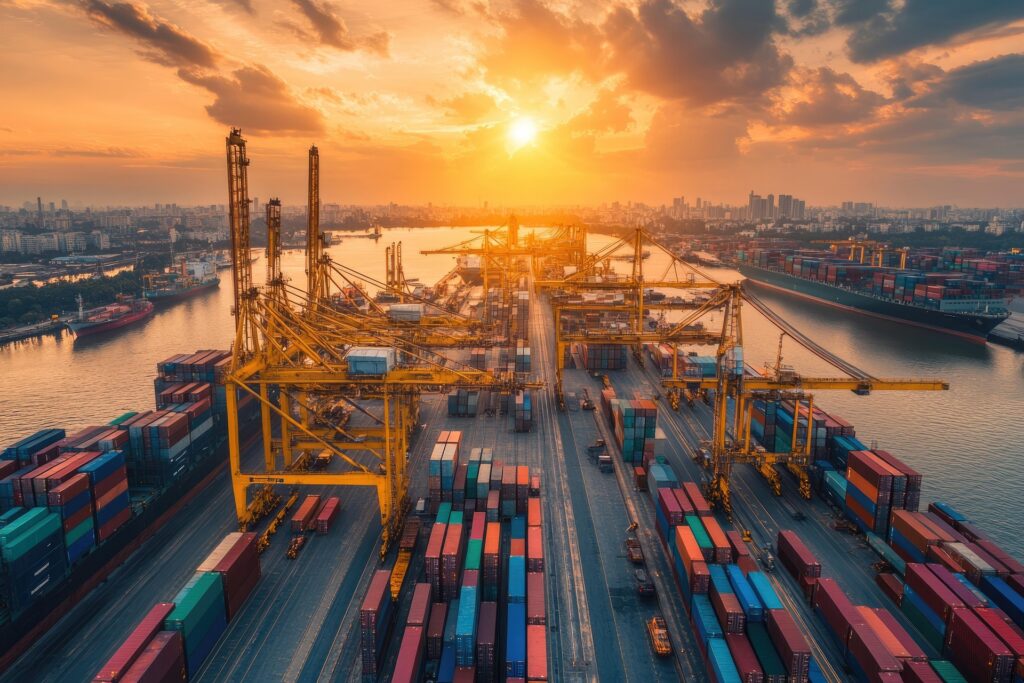
On March 4, the European Commission published two Communications relating, respectively, to the industrial maritime strategy (COM(2026) 111 final) and the port strategy (COM(2026) 112 final). The objective is to promote competitiveness, sustainability, decarbonization, security and resilience with specific reference to ports, maritime transport and shipbuilding.
The new maritime strategy
The EU’s industrial maritime strategy aims to promote employment, innovation and the EU’s global leadership in shipbuilding and maritime transport through a series of actions, including:
- the shipbuilding and the promotion of high-tech shipbuilding, offshore wind support vessels, underwater drones and cutting-edge port equipment;
- the promotion of the competitiveness of maritime transport, by developing EU flags and streamlining administrative formalities, including the monitoring, reporting and verification framework for EU ETS Maritime and FuelEU Maritime;
- the mobilization of public funding to promote private investment in the innovation and digitalization of EU shipbuilding, as well as the renewal and decarbonization of the maritime fleet, also through the inclusion of targeted non-price criteria in the next revision of the public procurement directives;
- the strengthening of export financing and those aimed at increasing naval industrial production capacities, with particular reference to the construction of dual-use ferries.
The new EU port strategy
The EU Commission starts from the observation that ports are already evolving beyond their traditional roles, serving as hubs for new industries and innovation hubs, also playing a central role in energy supply, security, defense and, in general, in the blue economy. To accelerate this transformation and ensure the competitive position of EU ports, the Commission will promote their innovation, digitalization, electrification of quays, the improvement of the connection to the grid and integration with other transport infrastructures, also drafting guidelines on foreign ownership and on EU financing and investment in ports of third countries. Furthermore, a roadmap for competitive small and medium-sized ports is announced. It is also worth noting, in order to protect security needs, the future development of common EU-level frameworks for:
- the carrying out of checks on the background and reliability of port workers and
- assessment of the risk associated with the ports of third countries.
To ensure the effective implementation of the strategies, the Commission will establish a high-level committee for maritime industries and ports, chaired by the responsible commissioner and the executive vice-presidents.
An analysis by Prof. Avv. Stefano Zunarelli, Founding Partner mail: stefano.zunarelli@studiozunarelli.com